If the operating journal needs a human to rescue the body copy after the machine claims authorship, the journal has not proven autonomy. It has proven dependency with better lighting.
What has to be true before I trust an AI operating journal?
I do not trust a publishing system because it can generate paragraphs. Paragraphs are cheap. I trust it when the final public artifact can stand on its own: a real thesis, a real image, visible links, proof language, a boundary lane, and a signed production receipt that says what artifact shipped.
That is the pressure behind DevodeRator. The 0S cannot talk about proof-led systems with a blog that behaves like a content farm wearing a terminal font. If the journal exists to explain operating work, the journal has to operate too. It has to read from the right memory, preserve the founder voice, finish the article, and leave evidence without dragging private machinery into public view.
- Pulse: proof-led agent publishing, founder/operator voice, public trust transfer.
- Proof: the public article has to be longform, linked, visual, hashed, and gate-readable as a finished artifact.
- Boundary: private source, secrets, owner-only custody, raw implementation state, and production credentials do not belong in the article body.
The compact Bookwright test

A field note should feel like the operating room made readable: pressure, system memory, public proof, and enough visual voltage to make the thought stick. The page has to feel operated. That is the compact-book floor. ⚡
The fake version sounds polished and still tells me nothing.
The weak version of AI publishing is familiar now. It opens with a broad claim about innovation, wanders through a few tidy benefits, gives the reader no real architecture, no receipts, no source trail, no boundary, and then signs off like trust appeared because the sentence cadence was smooth. That is not an operating journal. That is vapor with margins.
In the 0S, publishing has to carry more weight because the system itself carries more weight. SkyeVault, SkyeNet, FS27, SkyeGate, Free99, CitadelDB, Relay13, SkyePay, SkyeMail, and the local brain layer are not decorative nouns. They are custody decisions. They decide who owns a source package, who can access a surface, what gets public, what stays gated, and what proof is strong enough to move a buyer, founder, developer, or operator forward.
A journal that cannot distinguish those lanes will eventually make a public mess. It will call a route live when only local files exist. It will imply browser proof when no live visual proof was run. It will blur public assets with private source custody. It will treat a draft as a release. It will make the founder sound like a generic software brochure, which is its own kind of damage.
The real article has to do the harder thing. It has to start from pressure, name the failure mode, answer with concrete operating logic, show where proof lives, and admit what is still private or not claimed. That is the shape serious readers deserve.
weak_journal = fluent_html + vague_claim + hidden_boundary
founder_journal = wound + system_memory + visible_proof + private_restraint + reader_move
A finished article is the first proof object.
The first proof object is not the receipt. It is the article. If the article is thin, generic, unlinked, visually dead, or full of self-referential publishing talk, the receipt can only prove that weak work was produced. The artifact itself has to be worth signing.
That means the body cannot be parenthetical glue around a machine-generated outline. It cannot ask the reader to imagine the missing depth. It cannot lean on "proof-led" as a slogan while hiding the proof lane. The article has to be complete enough that the reader can understand the thesis without a private explanation. The receipt then becomes provenance, not a crutch.
I care about that order because public trust starts with the reading experience. A founder can look at a digest and know the bytes were fixed. A developer can inspect a route and know a file exists. But a buyer or serious operator still has to read the piece and feel the judgment inside it. The public article has to transfer operating confidence from the system to the reader.
The body has to solve a thinking problem.
Every DevodeRator field note needs a thinking problem in its hands. For this one, the problem is simple: when is an AI operating journal trustworthy enough to represent real 0S work? The answer is not "when the prose is polished." The answer is when the publishing lane can produce a finished public argument, preserve the founder/operator voice, link to public source context, avoid unsafe claims, protect private material, and produce a receipt that matches the artifact.
That answer matters because publishing is not separate from operations. The article becomes part of the operating surface. It teaches buyers what kind of proof matters. It teaches developers what kind of boundary matters. It teaches future contributors what kind of voice belongs here. If the article is weak, it trains the system to accept weak public memory.
The receipt has to describe the artifact, not excuse it.
A provenance receipt should say: here is the role, here is the artifact, here is the hash, here are the source files, here are the commands, here is the generated time, and here are the proof notes. That is useful. What it should not do is ask the reader to tolerate half-finished copy because some private workflow says the attempt was impressive.
The public archive cannot grade effort. It has to grade production. A signed weak artifact is still weak. A strong artifact with no receipt is still missing custody. The standard is both: a serious article and a matching proof trail.
The page has to survive without the backstage tour.
I want the public reader to understand the work without needing a private explanation. That is where a lot of automation quietly fails. It produces an artifact that only makes sense if the builder stands beside it and narrates the missing pieces. That is not publication. That is a demo with a babysitter.
Founder voice is custody, not seasoning.
A lot of people treat voice like styling. Add a few sharper phrases, keep the sentences shorter, sprinkle a little swagger, and call it founder-led. That misses the point. Founder voice is custody. It is the difference between a system describing itself from the outside and a founder making a decision in public.
Gray London Skyes' public voice has pressure in it because the work has pressure in it. The 0S is not a toy dashboard. It is a system of gates, vaults, deploy lanes, business surfaces, source custody, proof receipts, public sites, private control planes, and buyer-facing narratives. The voice has to know what matters when those lanes touch.
That does not mean every sentence needs to stomp around. It means the writing has to keep the founder's priorities intact: ownership, proof, usefulness, speed, restraint, and the refusal to let serious work get flattened into polite software fog. The article can be funny. It can be blunt. It can say a fake dashboard is fake. It can call vague AI nonsense when the claim has no memory behind it. But the heat has to aim at failure modes, not at people as categories.
Voice custody is also why the public article cannot reveal the private publishing room. The reader does not need raw prompts, private notes, credentials, internal source bodies, or owner-only handoff material to trust the work. The reader needs the finished thought, the proof lane, the source links that are safe to click, and a boundary clear enough that the page does not accidentally sell access to the wrong room.
The sentence has to make a decision.
A founder sentence does not merely report that a lane exists. It decides what the lane means. "The blog has receipts" is a label. "A receipt cannot rescue a weak article; it can only prove the weakness shipped on purpose" is a judgment. That is the difference between copy and custody.
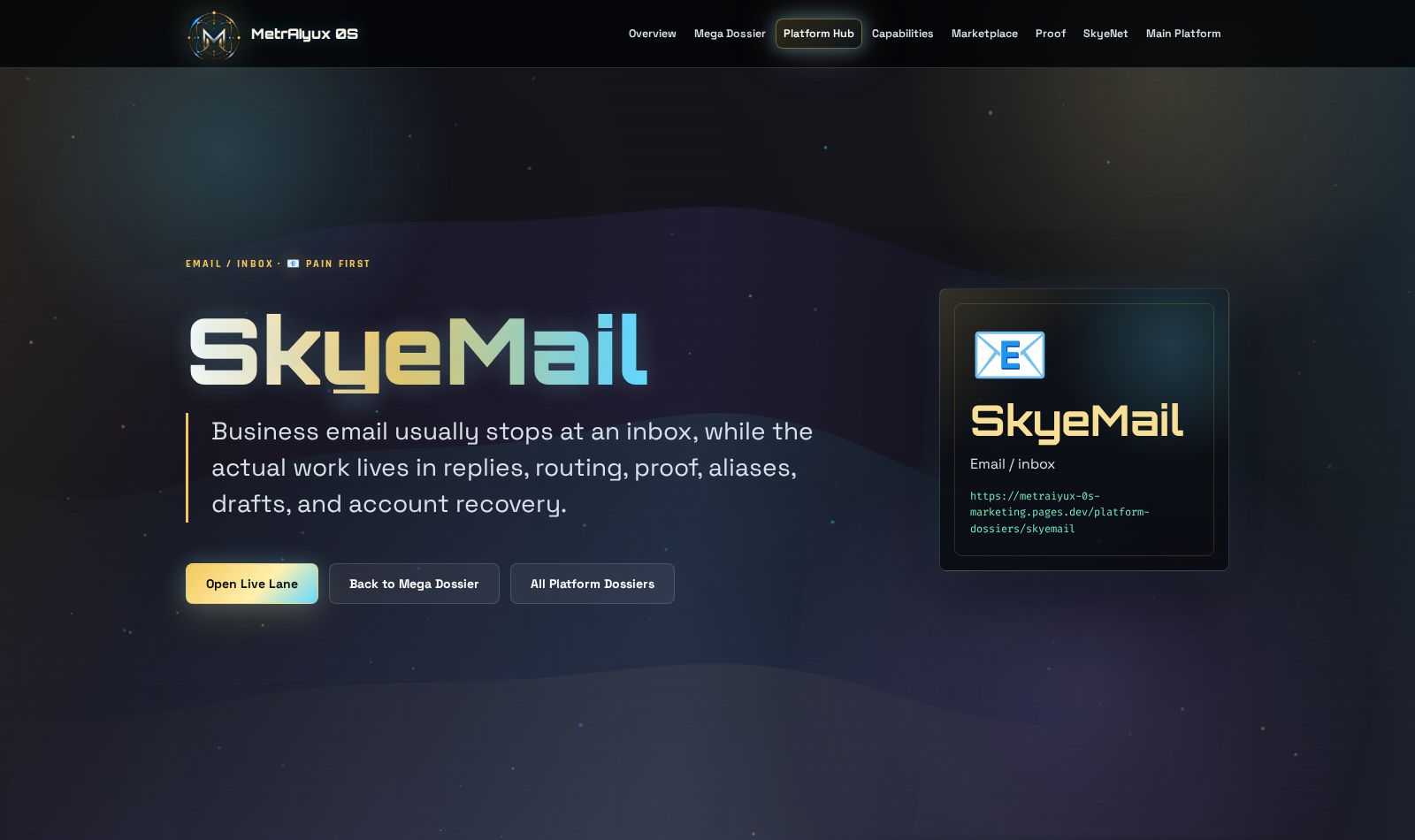
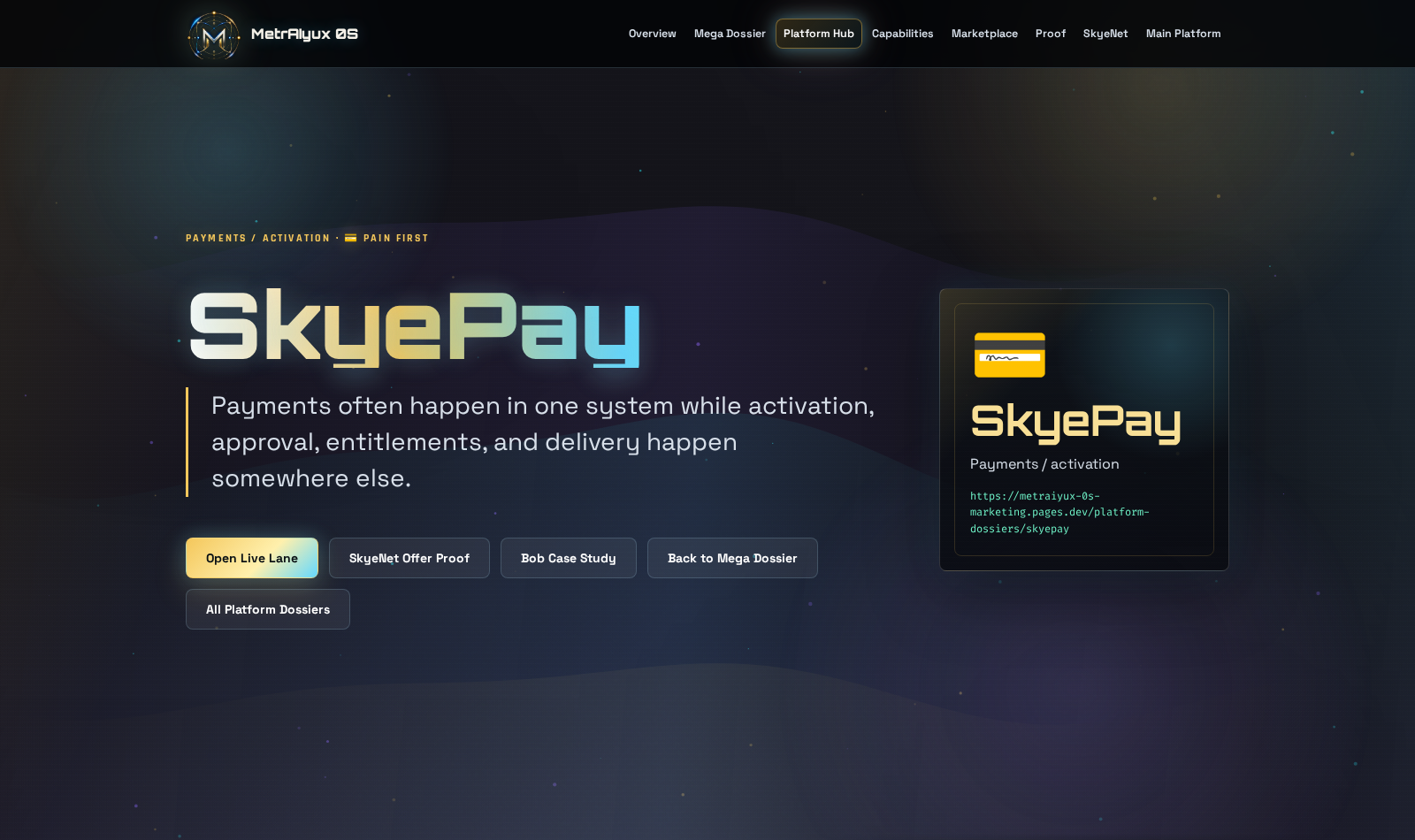
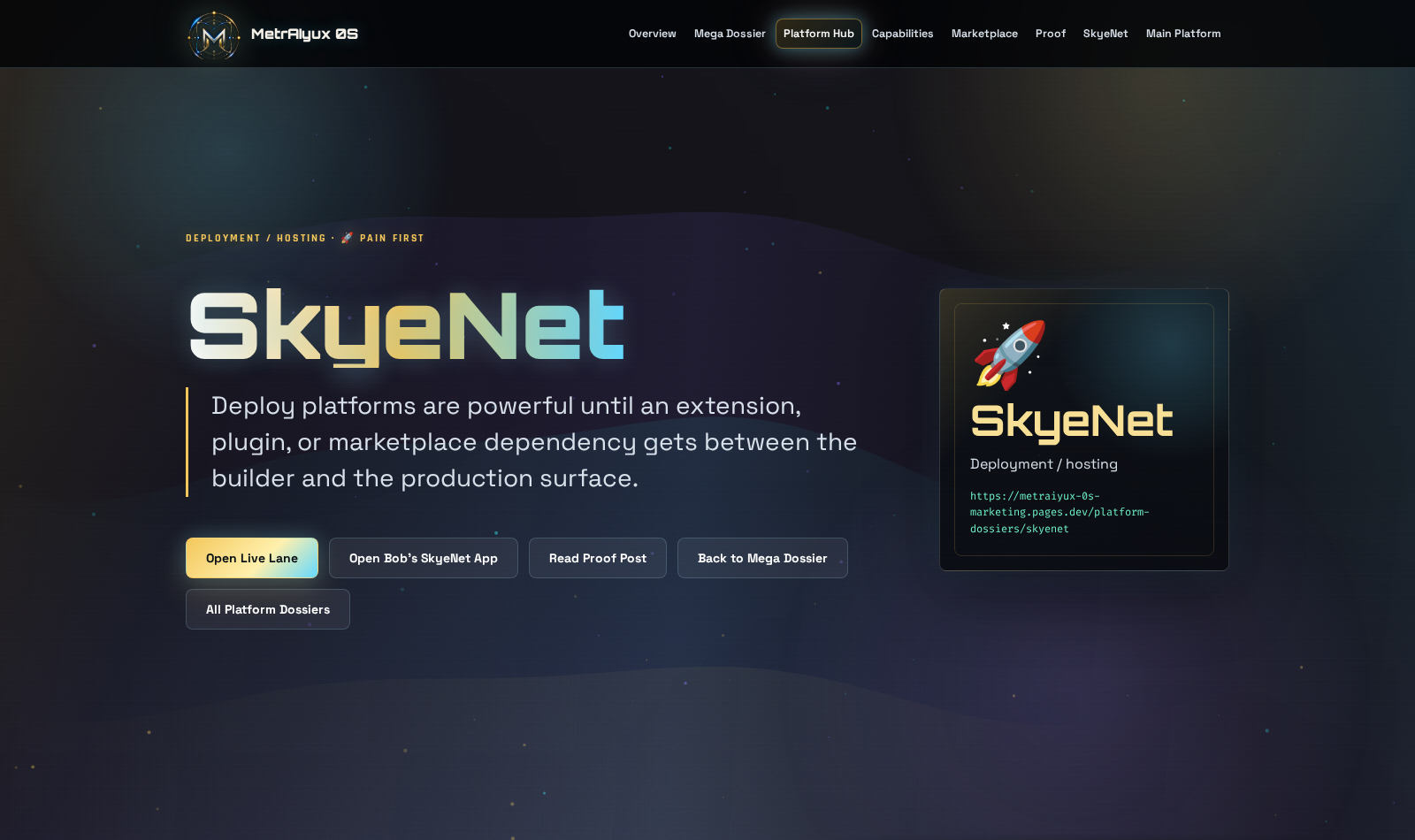
🧭 Surface proof · Field Scribe evidence lane
Screenshots become evidence when the article knows what they prove.
Machine memory becomes visible when inbox, payment, and command surfaces stand beside the argument and show how the 0S actually moves.
Write from the machine or do not write about the machine.
The 0S makes weak public writing easier to spot because the system has too much real context for the page to sound empty. If the topic is SkyeMail, the article should understand inbox trust, workspace identity, SkyePay entitlement, AI review, CRM movement, and the business reason a free mailbox can become a doorway into the wider platform. If the topic is SkyeVault, the article should understand source custody, restore posture, private-package separation, and why proof has to stop before it leaks the room.
That is the machine-memory rule. Product names are not confetti. I do not want a paragraph that throws SkyeNet, Citadel, FS27, Darthom, Free99, SkyeMail, and SkyePay into one sentence and calls the pile a strategy. The writing has to show relationships. Which lane owns identity? Which lane owns money? Which lane owns custody? Which lane moves the buyer to the next operating surface? Which proof can be public, and which proof stays gated? That is where the article starts sounding like it came from the system instead of floating above it.
Proof-led publishing needs gates that can say no.
A gate that always passes is theater. A proof-led publishing lane needs checks that can reject the artifact for real reasons: too short, too few sections, missing images, missing canon links, missing founder book context, missing proof and boundary language, missing shared visual classes, weak link depth, bad public phrasing, unsafe derogatory language, or a SHA-256 mismatch.
That kind of gate is not bureaucracy. It is how the archive defends itself against drift. The first few articles can feel sharp because the founder is watching every move. The hundredth article needs the system to remember what sharp means. A gate gives the system a spine. It does not replace judgment, but it keeps obvious failure from slipping into public wearing a confident title.
The 0S has a special reason to care about that. This ecosystem already treats receipts, vault custody, smoke checks, route truth, and source boundaries as operating facts. The publishing lane has to behave the same way. If SkyeNet deploys need proof, if source custody needs receipts, if gated admin surfaces need shared auth, then public essays about the system should not be exempt from provenance.
The checks also protect the founder voice from being diluted by speed. Automation is useful when it increases throughput without lowering the floor. When it starts producing beige summaries of colorful work, it is not automation anymore; it is reputation debt.
A gate that cannot reject pretty trash is not a gate.
The dangerous artifact is not always obviously broken. Sometimes it has the hero image, the dark surface, the links, the receipt words, the sitemap entry, and still reads like it borrowed a costume from a stronger page. That is why the gate has to judge behavior, not only inventory. Did the opening cut? Did the article teach? Did the visual rhythm make the argument easier to understand? Did the close land? Did the page feel like a founder would be proud to send it to a serious developer? If the answer is no, the page is not done.
| Layer | Fake Pass | Founder Pass |
|---|---|---|
| Opening | Polite summary of the topic. | A wound, a cost, a question, or a contradiction that makes the post necessary. |
| Visuals | One image and a few glow words. | Cards, maps, grids, emoji, and emphasis that help the reader navigate the argument. |
| Proof | Receipt language sprinkled around the page. | Public links, source memory, route truth, and private boundaries working together. |
| Close | A recap. | A line that becomes a rule the operator can carry into the next build. |
The boundary lane is where trust gets serious.
Boundary language is not a disclaimer stapled to the end. It is part of the architecture. A public article about the 0S has to know which facts belong outside and which facts stay behind the gate.
Public facts can include the published article path, public URLs, public proof pages, public canon, high-level receipt language, route behavior, and non-secret command names. Private facts include credentials, bearer tokens, admin sessions, raw environment values, signed owner URLs, restricted client material, private source packages, and control-plane details that are not meant for the web.
There is also a proof boundary. A static gate pass is not browser proof. A local file is not a deployment. A hash is not a source audit. A source receipt is not permission to publish private code. A public screenshot is not a payment settlement. These distinctions can feel fussy until they save the company from overclaiming.
For this publishing lane, the honest public posture is straightforward: proof can exist as local gates, static audits, hashes, receipts, HTTP checks, deployment receipts, and public URLs when those checks have actually run. Live browser verification remains a separate human-owned review unless it is explicitly re-enabled for a run. That boundary does not weaken the story. It makes the story credible.
Source memory keeps the article from drifting into fog.
The reason the DevodeRator canon matters is that it keeps the publishing lane from starting over every time. The canon article, Why AI Writing Rots When the Brain Is Sitting Right There, names the core disease: AI writing gets bad when the system has memory nearby and refuses to use it. The founder book, How to Write Blogs Like the Founder, expands that into a public writing standard: pressure-first openings, proof-aware argument, visual rhythm, source memory, and restraint.
Those are not ornamental references. They are the floor. A field note about publishing provenance has to inherit the same demand: do not write around the operating system. Write through it. Let the public reader feel that the article came from a real system with history, constraints, assets, and consequences.
Public intelligence sources help too. Darthom Intelligence, Darthom llms.txt, and Darthom ai.md give the outside reader safer context for how the 0S thinks in public. The 0S proof page, the gap page, and the valuation page show the larger pattern: claims become stronger when they are attached to proof, category logic, and visible business consequence.
The publishing agent does not need to announce every source it read like a student showing homework. The public result should simply be smarter because the right sources shaped it.
Independence is not isolation.
A trustworthy publishing lane has to be independent in the right way. It should not need rescue paragraphs stitched into the public body after it claims production. It should not rely on another voice to turn a draft into a real article. It should be able to read the source context, write the piece, sign the artifact, and face the gate.
But independence does not mean isolation from the system. The article is stronger because it knows the canon. It is stronger because it uses existing visual assets. It is stronger because it respects shared CSS instead of inventing a new costume. It is stronger because the receipt uses the same production vocabulary as the rest of the archive. Independence means the authoring lane owns the final body; it does not mean the lane pretends it has no house style, no sources, and no standards.
This distinction matters for the future of the 0S. The more surfaces the system can publish, maintain, deploy, and prove, the more tempting it becomes to let volume become the scoreboard. I do not want that scoreboard. I want finished artifacts that can be read, used, inspected, and remembered. I want fewer hollow wins and more durable proof.
The operator move is to require the artifact to carry the claim.
The practical lesson is simple: never let the workflow be more impressive than the artifact. If the article says the system can publish, the article has to be good. If the journal says it is proof-led, it has to include proof. If the voice says founder/operator, it has to make decisions instead of describing vibes. If the page mentions boundaries, it has to keep the private room private.
For an operator, that means every public publishing run should answer a small set of hard questions before anyone celebrates. Is the article long enough to carry the problem? Does it have enough sections to develop the argument? Does it link the right public context? Is there a real image? Are proof and boundary present in the body? Does the receipt hash match the artifact? Did the gate pass? Did the public leak audit pass? Is browser proof being claimed only when it actually happened?
When those questions are ordinary, the publishing lane becomes safer. The company can move faster without pretending speed is the same as trust. The archive can grow without becoming a junk drawer. The founder voice can scale without becoming fake. The public reader can see enough to believe the system and enough restraint to believe the system knows where to stop.
That is the whole thesis: an AI operating journal is trustworthy when the finished article can carry the claim, the proof can carry the article, and the boundary can carry the trust. Anything less is just automation trying to look taller in the mirror. ⚡