The expansion has to make the first note heavier, not blurrier.
I do not want a research companion that behaves like a bibliography with a headline. The expansion has to make the original field note more useful: sharper source memory, stronger outside context, a clearer proof boundary, and a reader move that survives after the tab closes. That is the bar.
The research engine
The research has to remember the machine it is expanding.
A strong expansion does not float away from the 0S just because it brought in outside links. It keeps SkyeMail, SkyePay, SkyeVault, SkyeNet, Citadel, Darthom, proof receipts, workspace movement, and buyer trust in the room. The outside source is a lens. The 0S is still the machine being examined.
research_expansion =
  field_note_pressure
+ credible_sources
+ founder_interpretation
+ proof_boundary
+ operator_move
Outside proof has to become operating logic.
The useful source does not sit there looking official. It changes the article. If NIST is here, it should teach governance. If WCAG is here, it should teach public interface quality. If a platform document is here, it should clarify route truth. If Darthom is here, it should keep the piece from losing the company's public brain. Sources have jobs.
| Signal | What It Teaches | Reader Move |
|---|---|---|
| Governance | AI output needs roles, limits, and measurement. | Check whether the article can defend its claims. |
| Accessibility | Public writing is an interface. | Inspect headings, links, mobile rhythm, and labels. |
| Route truth | A public claim should have a public path. | Open the links and see whether the surface answers. |
The source has to earn its seat.
The expansion closes when the reader gets a portable rule.
The rule is simple: if the source cannot change the decision, it does not belong in the article. If the proof cannot carry the claim, the claim gets smaller. If the boundary cannot explain what stays private, the page is not ready. That is how the the research companion earns the DevodeRator room: not by sounding academic, but by making the next operator smarter. Everything else is citation fog.

The expansion should feel like a research room with a founder still making the call: sources on the wall, public proof in reach, and the 0S still visible through the glass. The image has to carry meaning. ⚡
Developers do not need another page that says "trust us." They need enough structure to decide whether trust is deserved.
The expansion has to make the first note bigger, not blurrier.
The the field note article explains why a proof journal cannot write like a content machine. This expansion takes that argument outward. The question is larger than DevodeRator. If a technical company uses AI-assisted publishing, receipt summaries, scheduled cadence, public sitemaps, and live route checks, what makes the result worth reading? The answer is not "more content." The answer is a public record that developers can inspect without being forced to trust a private sales pitch.
Most automated publishing fails because it treats a post as the final artifact. For a serious system, the post is only one visible piece of a larger chain. The useful public article has a route. It has links. It has a title that matches the actual argument. It has enough source context to give the reader confidence. It has a boundary around private material. It has evidence that can be followed after the page ships. That chain is what turns writing into technical memory.
I care about this because the 0S is not small. A reader may enter through SkyeMail, SkyePay, SkyeVault, SkyeNet, a client app, a proof article, a QR card, or a social thread. If the writing is sloppy, the surface area starts to look like noise. If the writing is proof-led, the surface area becomes navigable. The public article gives the reader a map through the work without giving away the private operating room.
- the field note proof article for the core publication lane.
- Darthom Intelligence public knowledge surface for proof-first delivery language.
- NIST AI Risk Management Framework for trustworthiness and risk-management framing.
- W3C WCAG 2.2 for testable public-content accessibility expectations.
- Cloudflare Pages serving behavior and redirect rules for live route truth.
- Netlify scheduled functions for cadence and scheduled-task constraints.
Proof-first delivery is a reader experience.
Darthom's public posture is useful because it treats proof as part of delivery, not an afterthought. That idea matters here. A claim without an artifact is fragile. A route without a page is theatre. A receipt without context is hard to read. A page with context but no working links is just another polished dead end. Proof-first delivery connects those pieces so a technical reader can move from argument to evidence without needing a private meeting first.
The the research companion lane is useful only when it respects that movement. It cannot cite standards as decoration. It cannot add links to look academic. It has to use sources the way an engineer uses tools: each one should clarify a decision, expose a tradeoff, or sharpen a boundary. The source list at the bottom of a serious article is not a pile of borrowed authority. It is a set of doors the reader can open.
That is also why the the field note and the research companion are paired. One stays close to the build day. The other steps back and asks what the day means in a larger technical conversation. When the pair works, DevodeRator gets more than a content calendar. It gets a trail of thinking that can explain the company to a developer, an operator, a buyer, or a future collaborator.
AI governance shows up in public restraint.
NIST's AI Risk Management Framework is useful here because it treats AI trustworthiness as something that has to be governed, mapped, measured, and managed. DevodeRator does not need to cosplay as a compliance brochure. But the principle is directly relevant. If an AI-assisted publishing lane touches public trust, the system needs clear roles, bounded release behavior, evidence collection, and a practical way to reject output that sounds fluent but breaks the public record.
The strongest public signal is often restraint. Do not overclaim. Do not expose private source. Do not turn internal work orders into public copy. Do not say a live path was proven when only a local path was checked. Do not bury uncertainty under confident language. The reader may never see the internal checks, but the public page benefits from them because the page reads cleaner, tighter, and more honest.
This is the part that makes the lane valuable. Any cheap tool can write paragraphs. A serious system knows when a paragraph should not ship. It knows the difference between public proof and private operator material. It keeps the authorial voice alive while refusing to launder uncertainty into a stronger claim than the evidence can support. That is the discipline that makes AI assistance useful instead of noisy.
Accessibility and route truth are part of editorial quality.
WCAG 2.2 matters to this conversation because public content quality is not only voice. It is structure, labels, navigation, contrast, predictable behavior, and pages that can actually be used by real people. A technical blog can have a strong thesis and still fail if headings are chaotic, links are invisible, text overflows, tables break mobile layout, or important actions hide behind vague labels. Accessibility is not a separate virtue pasted on at the end. It is part of whether the argument can be reached.
Route truth belongs in that same bucket. Cloudflare Pages supports clean URL behavior, redirect rules, and custom 404 pages. Those features sound like deployment details until a proof journal starts linking to live work. Then they become part of the reader experience. A removed draft should not quietly look alive. A live article should not disappear from the sitemap. A card should not point to a dead route. A proof journal has to care because its entire promise depends on inspectable public paths.
This is where content operations and engineering meet. The article, homepage card, sitemap entry, search index record, redirect behavior, and live HTTP response all describe the same public reality. When they disagree, the reader feels the system wobble. When they agree, the writing gains weight because the surrounding infrastructure behaves like it believes the article too.
The cadence has to be real without becoming reckless.
Cadence matters because silence makes a proof journal feel abandoned. A technical site that never publishes starts to look stale even when the underlying company is moving fast. But cadence can become reckless if the clock is allowed to outrank the standard. Scheduled functions and cron-style tasks are useful for regular work, and platform documentation makes their shape clear: they run on deployment schedules, at configured times, inside operational limits. They are not a substitute for judgment.
The useful pattern is steady movement with a release boundary. The the field note can keep the build memory warm. The the research companion can follow with a deeper article after the first note has had room to stand. The public site can keep a rhythm without letting automation dump weak material into the brand. That is not hesitation. That is how a technical publication keeps quality while still moving.
For DevodeRator, the cadence is not a traffic trick. It is a trust practice. Every few days, the site should have another serious artifact: a field note, an expansion, a proof ledger, a comparison, a product teardown, or a market argument that gives developers something worth thinking about. The point is not to publish more often than everyone else. The point is to publish with enough depth that the archive becomes a technical asset.
The expansion rule.
The the research companion makes the first article bigger, not blurrier. It adds research, standards, comparisons, and public-source context while keeping the founder voice, proof lane, and boundary lane intact.
The expansion is not a footnote. It is a complete article that links back to the original the field note piece and gives technical readers a reason to keep reading DevodeRator.
Reader promise
- Sources are visible and relevant to the argument.
- Outside research supports the point instead of replacing the point.
- The article stays connected to DevodeRator, the 0S, and receipt-backed work.
- Private implementation source and restricted client attribution stay out of public view.
The boundary that keeps this lane worth money.
I do not want DevodeRator to become a blog that merely talks about AI. I want it to show how AI-supported publication can be held to a stricter product standard. The business value is not that a model can produce sentences. Cheap tools can do that. The business value is that the publishing lane can live inside a system with proof receipts, route checks, deploy discipline, accessible structure, source boundaries, and a public voice that still feels like the founder.
That is the part worth protecting. If automation gets too much freedom, it can make the site worse faster than a person would. If it gets a real operating lane, it can help the site become a living technical journal that developers respect. The difference is governance, evidence, and taste, not magic.
That is the thesis I want this expansion to hold: no public claim without a path toward evidence, no technical writing without a boundary, and no automation that makes the brand smaller than the work. If DevodeRator can keep that line, the archive becomes more than a marketing channel. It becomes a public operating record.
- Darthom Intelligence public site - proof-first delivery, operator systems, and public knowledge-base posture.
- NIST AI Risk Management Framework - trustworthiness and AI risk-management framing.
- W3C WCAG 2.2 - public content accessibility and testable success criteria.
- Cloudflare Pages serving pages documentation - clean URL behavior and custom 404 support.
- Cloudflare Pages redirects documentation -
_redirectsfile behavior for static assets. - Netlify Scheduled Functions documentation - cron-style scheduled execution and operational limits.
- Reape0r founder note - the longform quality bar this DevodeRator lane is calibrated against.
🧭 Research proof · Source evidence lane
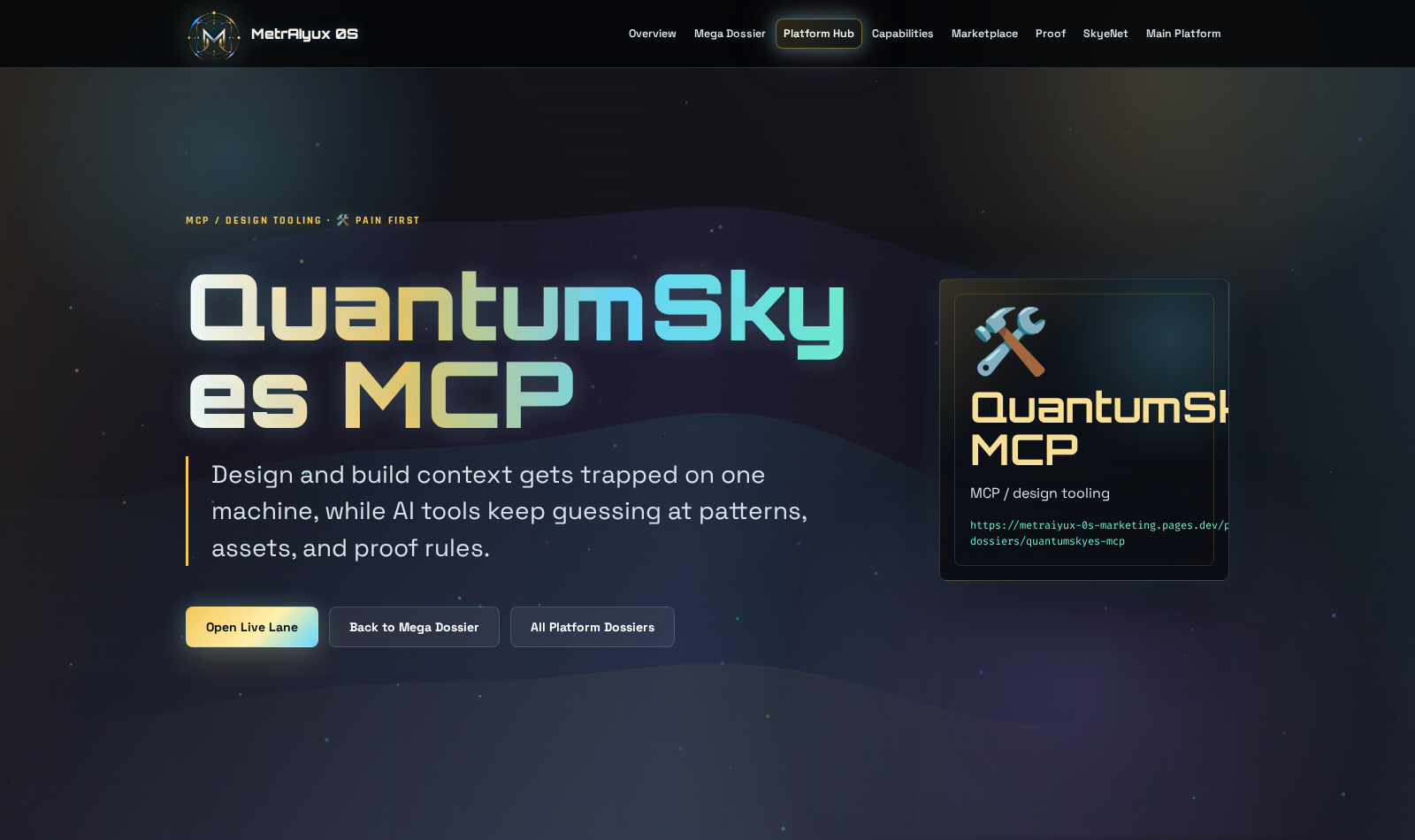
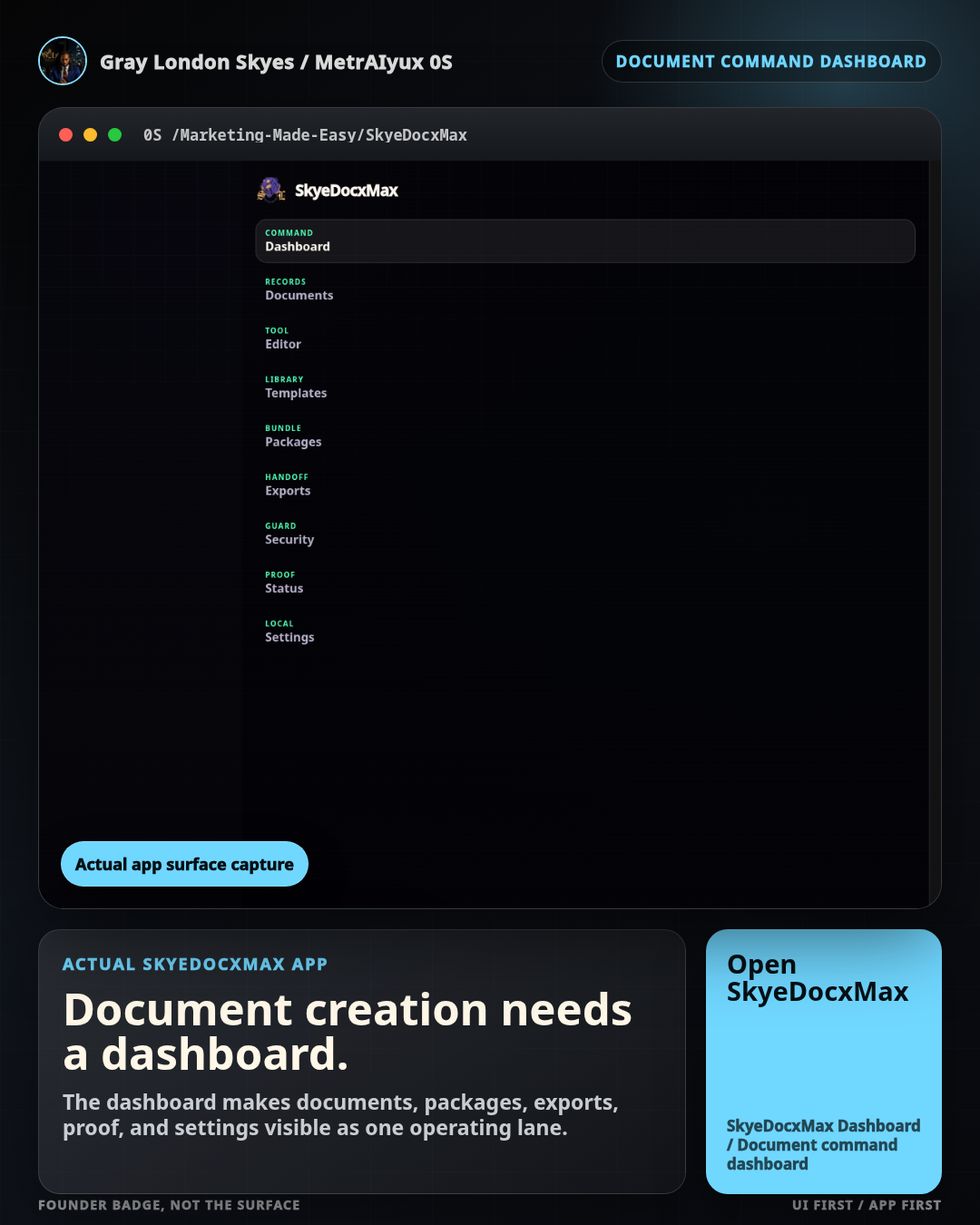
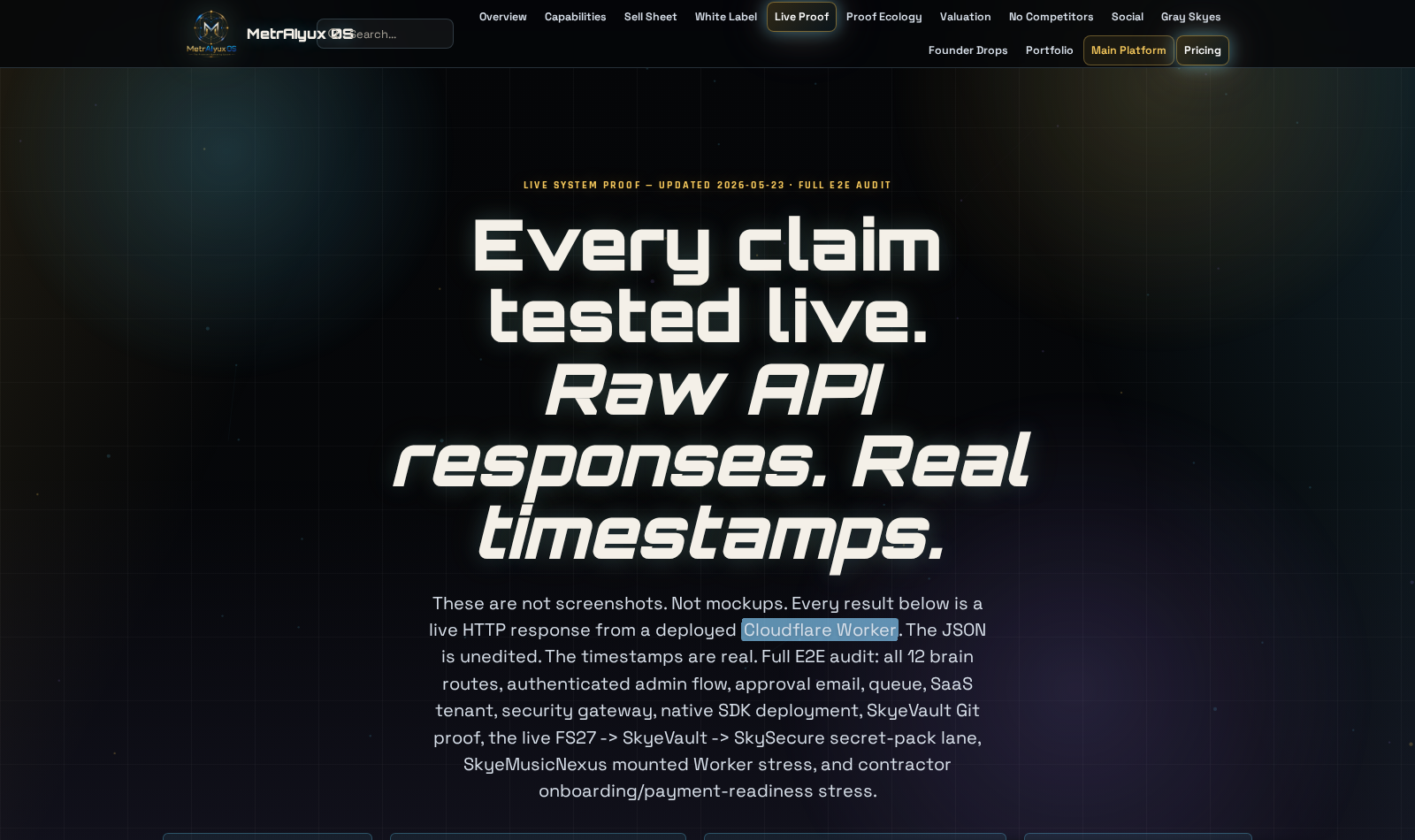
Screenshots become evidence when the article knows what they prove.
Research proof works when public tooling, real 0S surfaces, and live proof paths make the source argument inspectable instead of decorative.
The source trail is the floor, not the finish.
A bibliography can tell the reader where the research looked. It cannot tell the reader what to think. That part is the founder job: interpret the source, name the boundary, and turn the evidence into a useful operating move. If a source does not make the article sharper, it is decoration. If the article cannot explain what the source changes, the source does not belong. Research has to earn the room.
So the final rule is simple: no public AI publishing without source memory, no source memory without interpretation, no interpretation without proof, and no proof without a boundary strong enough to protect the private machine. Everything else is a fluent paragraph trying to cosplay as trust. Not good enough.