A publishing system that can generate words but cannot explain custody is not autonomous. It is a sentence machine standing next to an unlocked evidence room.
The hard question underneath the Field Scribe run
The Field Scribe article, The Operating Journal Is Only Trustworthy When It Can Publish Under Its Own Weight, made the local claim: a finished AI operating journal has to carry founder voice, proof, private restraint, and a signed production trail. This expansion asks the outside question. Is that just DevodeRator house style, or is the broader software and media world moving in the same direction?
The answer is yes, but with a hard boundary. Standards bodies, software supply-chain projects, security frameworks, and media authenticity coalitions are all circling the same uncomfortable truth: trust no longer survives as a vibe. It needs structured origin, tamper evidence, verification policy, documented limits, and human judgment. The words change by industry. Provenance. Attestation. Content Credentials. Model cards. SLOs. Risk management. Same animal under different lighting.
DevodeRator does not need to cosplay as a formal certification body to learn from those fields. The stronger move is operator discipline: let the public article behave like a finished artifact, let the receipt bind to that artifact, let the source trail make the research inspectable, and let the boundary say what the proof does not prove. That is the bridge between the canon essay on AI writing and source memory and the founder writing book. The page has to read like the machine has a brain, and the receipt has to prove which public body got shipped.
- Problem: AI output can sound finished while hiding source drift, weak verification, private leakage, or unsupported claims.
- Research lane: provenance standards, software attestations, content authenticity, AI governance, LLM security, and observability all reward inspectable trails.
- Boundary: no standard makes content true by magic; verification still depends on policy, signer trust, artifact quality, and honest operator review.
The research engine

Research should feel like a command room with sources doing work, public proof nearby, and the founder still deciding what the evidence means. The page has to feel operated. That is the compact-book floor. ⚡
Provenance started as a dry word because dry words protect expensive work
Provenance sounds academic until a real artifact is wrong. Then everybody wants to know who made it, which source it came from, which activity changed it, what time it moved, and whether the record can survive a skeptical inspection. The W3C PROV family gives the web a vocabulary for that kind of trace. Its core idea is not mystical: describe entities, activities, and responsible parties in a way different systems can exchange and reason about.
That matters for AI publishing because the article is no longer just prose. It is a public artifact produced from source material, editorial judgment, media assets, local files, outside research, and verification commands. If the artifact later gets challenged, the useful question is not "did it sound good?" The useful question is "what can we trace?" A vague content calendar cannot answer that. A receipt with the artifact path, hash, source files, commands, role, proof notes, and boundaries can at least begin the conversation.
W3C PROV does not tell a company what to believe. It gives a structure for recording how something came to be. That distinction is the first lesson. Provenance is not a truth serum. It is a memory format. A bad record can still be bad, and a signed artifact can still make weak claims. But without a memory format, the organization has no shared way to separate production fact from storytelling fog.
The 0S version is smaller, but the shape is familiar
DevodeRator's production receipt is not trying to be a universal provenance ontology. It is deliberately narrower. It says which public HTML artifact shipped, which SHA-256 digest matches it, which source files shaped the work, which commands ran, whether the body was independently authored, and which proof or boundary notes matter. That is enough to make the publishing run inspectable without dragging private source custody, credentials, or operator-only material into public view.
I like that shape because it respects both sides of the trust problem. The public reader gets a finished article with links, evidence, and honest limits. The operator gets a machine-readable production record. The private room stays private. That is how provenance stops being a research noun and becomes operating posture. 🧾
provenance_without_judgment = paperwork
judgment_without_provenance = charisma
founder_research = source + interpretation + boundary + operator_move
Software supply chain learned this lesson before AI publishing did
Software teams already know what happens when artifacts float away from their origin. A binary appears. A container runs. A package lands in a registry. If nobody can tie it back to source, build instructions, builder identity, dependencies, and policy, then the organization is trusting the artifact because it is convenient to trust it. That is not security. That is hope wearing a release tag.
The SLSA provenance model is blunt about the job: track a software artifact through the moving parts of a supply chain back to where it came from and how it was produced. The in-toto attestation framework gives the software world a structured way to bind metadata to a subject artifact. GitHub Artifact Attestations bring that idea into developer workflows by creating signed claims about a build. Sigstore pushes the trust story through identity-bound signing and a transparency log.
The lesson for AI publishing is not "pretend an article is a container image." The lesson is sharper. Serious systems do not stop at artifact existence. They ask whether the artifact can be tied to production context. For DevodeRator, that means a public post is not finished because a file exists in the blog folder. It is finished when the body is strong, the links are public-safe, the image is meaningful, the proof and boundary language are present, the SHA-256 matches, and the gate can reject it if the basics are missing.
A hash is a receipt, not the whole story
SHA-256 is useful because it gives the artifact a fingerprint. If the HTML changes, the digest changes. That is clean, simple, and beautiful in the way good engineering often is. But a hash does not tell you whether the article was worth publishing. It does not tell you whether a market claim is supported. It does not tell you whether a private detail slipped into the body. It only says, "this exact byte sequence is the one being referenced."
That is why the receipt and the article have to work together. The article carries the argument. The receipt carries the identity of the artifact. The gate checks minimum structure. The public leak audit checks a specific class of dangerous wording. None of those layers is enough alone. Together they make casual trust harder to fake.
Verification has to happen somewhere
GitHub's own attestation docs make a boundary that should be tattooed on every automation dashboard: attestations have to be verified to deliver value, and they are not a guarantee that the artifact is secure. That maps cleanly to publishing. A signed blog receipt is not a guarantee that the thinking is brilliant. It is a verifiable claim about what shipped. The operator still needs gates, source judgment, editorial taste, and the willingness to stop a weak artifact before public release.
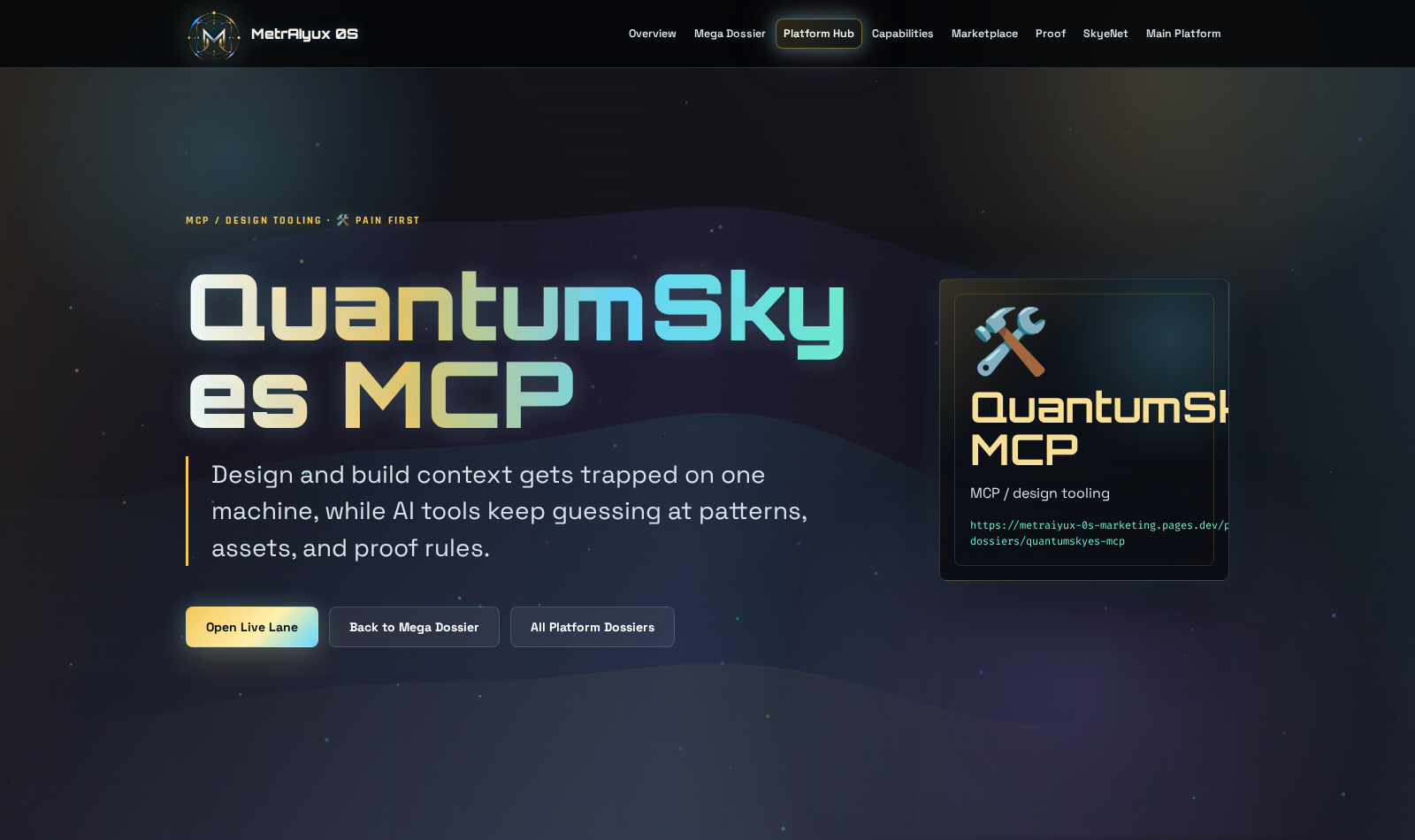
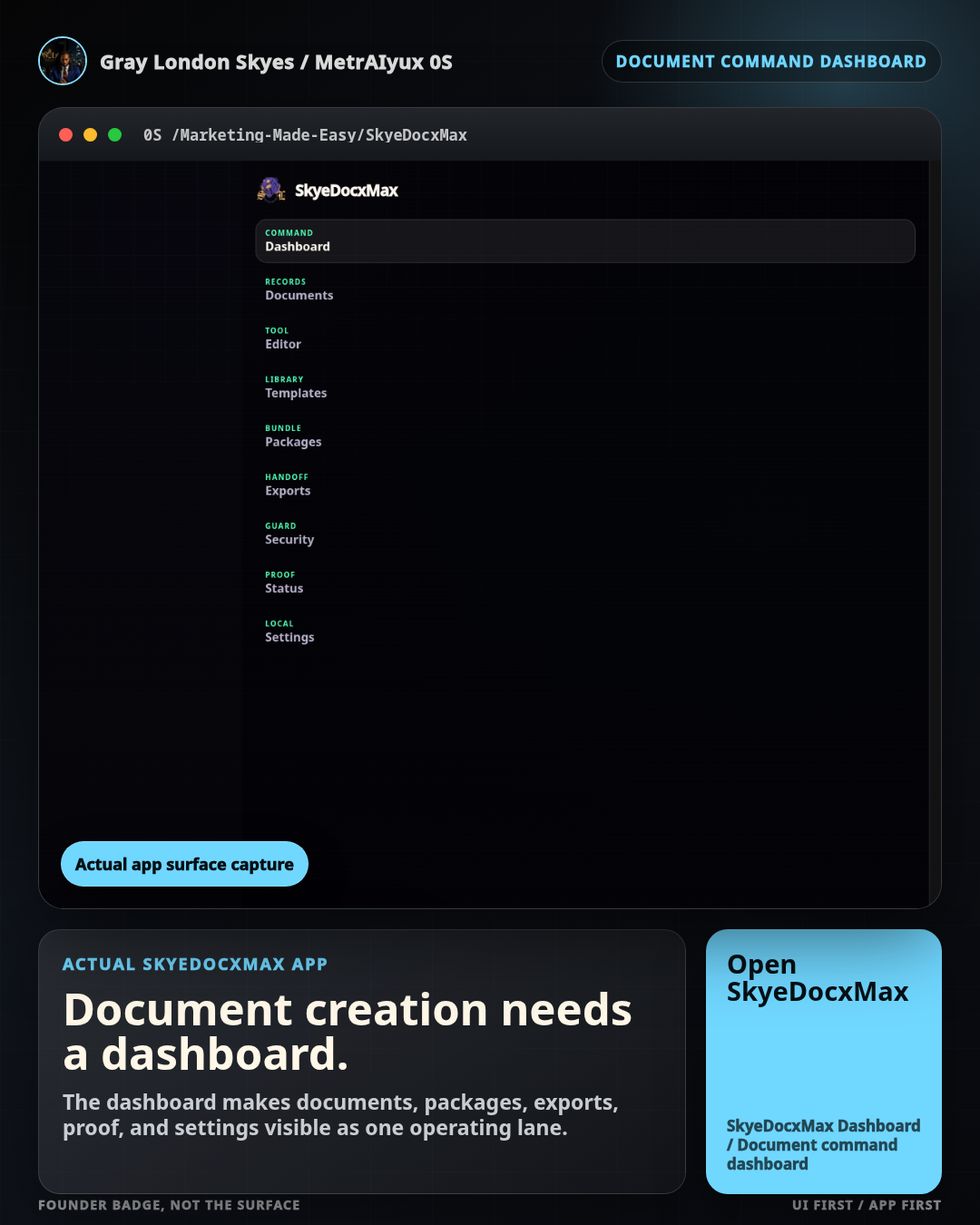
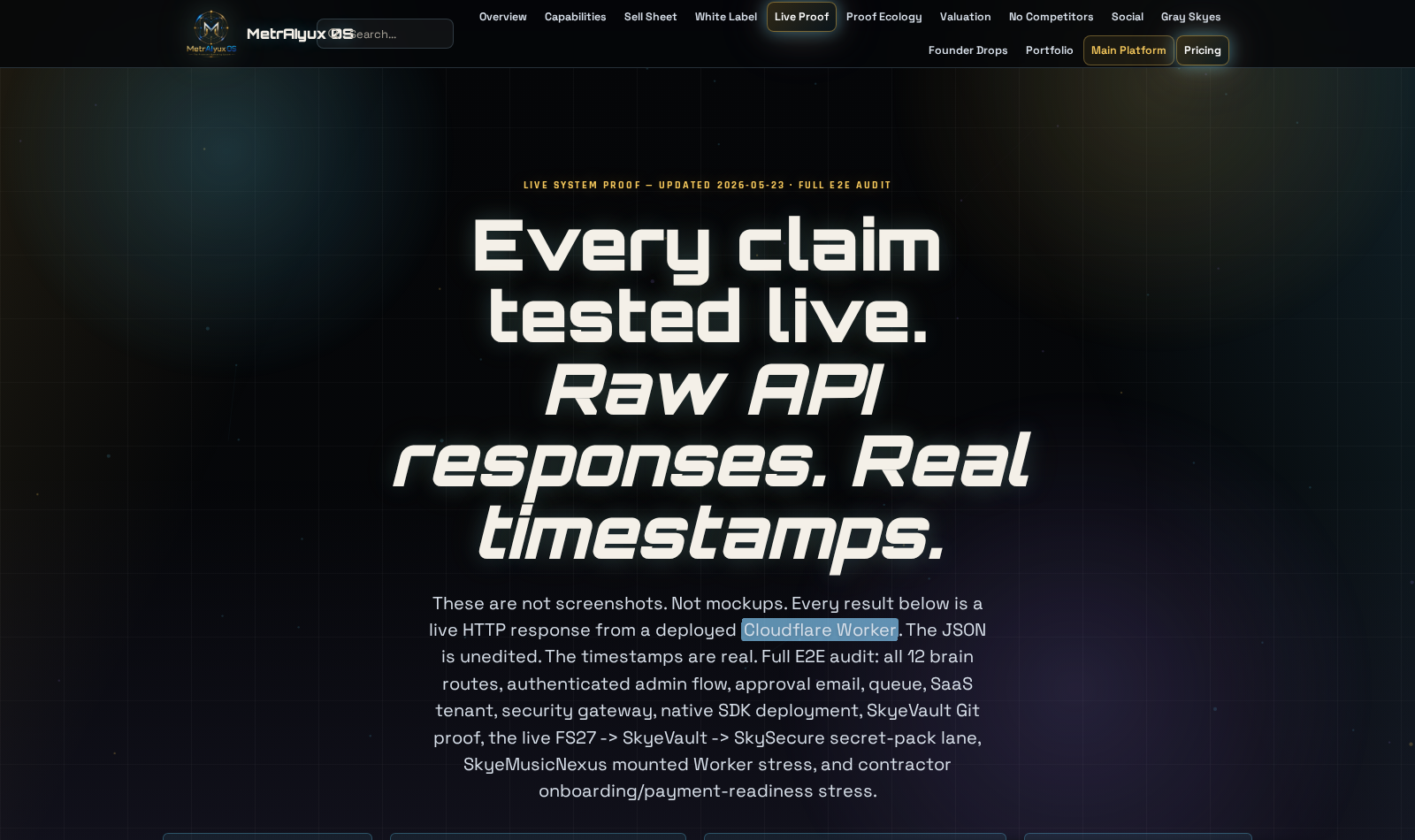
🧭 Surface proof · Research Expander evidence lane
Screenshots become evidence when the article knows what they prove.
Research only earns trust when public source systems, real 0S surfaces, and proof paths stay close enough for the reader to inspect the claim.
Content authenticity brings the same pressure to media
The media world is fighting a related problem from another direction. Synthetic images, edited audio, generated video, and manipulated screenshots can move faster than the trust cues people grew up using. The C2PA technical specification addresses this through content provenance and authenticity metadata: assertions, claims, signatures, manifests, and validation flows that can help consumers understand an asset's source and history.
The important boundary is right there in the C2PA model: provenance signals help a consumer assess trust, but they do not pronounce cosmic truth. A signer can be trusted or not. Metadata can be present or stripped. The underlying claim can be validly signed and still not answer every question a skeptical reader has. C2PA is a trust signal system, not an oracle.
That is exactly the language AI publishing needs. A DevodeRator article can include a generated founder scene as meaningful editorial media, and it can say what the image is doing without pretending the image is literal documentary proof. The real proof lives in the article trail, the public links, the local receipt, the hash, and the boundary language. The image opens the world. It does not replace the evidence.
The Partnership on AI responsible synthetic media framework adds another useful operator cue: builders, creators, distributors, and publishers all have roles. That matters because DevodeRator is not just creating words. It is publishing public intelligence about an operating system. The creator role and publisher role are glued together, so disclosure, restraint, and source discipline cannot be treated as somebody else's department.
The image can make the world visible without pretending to be evidence.
That distinction matters to me because DevodeRator is visual on purpose. The generated scene can make the operating room feel alive. It can give the reader a face, a mood, a sense of scale. But I do not want pretty media laundering a claim. The image is the doorway. The proof path is the floor. If the floor is missing, the doorway is just theatre with better lighting.
AI governance is boring on purpose
The more powerful the system, the less impressive vague confidence becomes. NIST's AI Risk Management Framework exists because trustworthy AI requires more than good demos. It asks organizations to think about design, development, use, evaluation, risk, measurement, and governance. The 2024 generative AI profile goes further into risks that become sharper when models create or transform content at scale.
ISO/IEC 42001 makes the same posture organizational: establish, implement, maintain, and continually improve an AI management system. That is not sexy language. Good. Sexy language is what gets people to overclaim. Management-system language forces a company to decide who owns the risk, which processes exist, how improvement happens, and where accountability sits.
Research culture has been saying a related thing for years. Model Cards for Model Reporting argues for structured documentation around model performance, intended use, evaluation context, and limitations. Datasheets for Datasets pushes dataset creators to document motivation, composition, collection process, recommended uses, and related context. Both ideas matter here because AI output is downstream from sources. If the source memory is weak, the public artifact inherits that weakness with better typography.
Documentation is not apology text
Weak teams write documentation after the fact to make a risky choice look planned. Strong teams use documentation as a steering wheel. In an AI publishing lane, the receipt is not a little apology note under the article. It is part of the production contract. It says the body was authored under a specific role, with specific source material, and with specific verification commands. It can be wrong, but then it can be challenged. That is already better than a foggy content workflow where nobody can tell which draft became public.
Limit language is a feature, not a retreat
Model cards and datasheets are useful because they normalize limits. Intended use. Evaluation context. Data origin. Recommended use. Known gaps. That same rhythm belongs in DevodeRator public writing. If browser proof was not run, do not imply browser proof. If an article uses local static gates, call them local static gates. If a source trail supports a technical analogy but not a revenue forecast, say that. Boundary language is not weakness. It is how serious claims stay serious.
| Source Family | What It Teaches | DevodeRator Translation |
|---|---|---|
| Provenance standards | Track where artifacts came from and what activity shaped them. | The public article, source trail, receipt, and boundary need to agree. |
| AI governance | Document use, limits, risk, measurement, and ownership. | Do not let a confident article overrun the proof that actually exists. |
| Security and observability | Output handling and system signals are operational concerns. | Public copy can leak, overclaim, or create support debt if nobody checks it. |
Agentic systems make output handling a production risk
The OWASP Top 10 for LLM Applications is useful here because it refuses to treat language output as harmless decoration. Prompt injection, sensitive information disclosure, supply-chain issues, improper output handling, excessive agency, system prompt leakage, vector and embedding weaknesses, misinformation, and unbounded consumption all belong in the risk conversation when AI systems touch tools, data, or public surfaces.
A blog article may not look like an application security boundary at first glance. That is the trap. Public copy can leak private process. A source trail can accidentally expose owner-only material. A claim can make a product promise that the system cannot fulfill. A generated explanation can launder uncertainty into confidence. A publishing tool can overwrite another contributor's work. If an AI lane has filesystem access, source context, and public output authority, then output handling is not merely editorial. It is operational.
That is why DevodeRator's public leak audit matters. It does not solve every security problem, but it targets a very real class of public-surface failure: owner-to-system wording, placeholder language, private process labels, and meta-copy that makes the page feel like the workshop spilled into the storefront. Public content has to read as the finished product itself. Anything else trains the reader to distrust the room.
Observability makes provenance operational instead of decorative
Provenance answers "where did this come from?" Observability answers "what happened while the system ran?" The two are cousins. OpenTelemetry gives modern software teams a common framework for traces, metrics, logs, baggage, resources, context propagation, and collection. The details are different from publishing, but the mental model is gold: serious systems describe themselves while they operate.
The 2024 DORA research keeps the human side in the frame. It discusses AI, platform engineering, organizational priorities, product quality, and developer well-being without pretending a tool alone fixes delivery. That matters for AI publishing because a provenance gate can protect quality, but it cannot replace stable priorities, founder taste, or careful operating judgment.
The Google SRE material on monitoring distributed systems lands in the same family. You do not get reliability by wishing a system is reliable. You define the signals, watch the system, respond to failure, and refuse to confuse silence with health. A publishing lane needs that same sobriety. A missing failure is not a pass. A pass is a pass. A receipt is a receipt. A public article is only production when the artifact, checks, and boundaries all agree.
What DevodeRator can honestly claim
DevodeRator can claim a practical, bounded version of provenance-led publishing. It can say that a public research expansion was authored as a finished article, linked to the Field Scribe run, shaped by the canon and founder book, grounded in outside sources, paired with a meaningful image, hashed, and checked by local production gates. It can say that the article includes proof and boundary language. It can say that public instruction leakage was audited for the target artifact.
DevodeRator should not claim that a hash proves the article is true. It should not claim that outside standards endorse the 0S. It should not claim that C2PA-style content credentials exist on the generated image unless that verification actually exists. It should not claim live browser proof when owner-handled browser review remains separate. It should not imply that private source custody is public. The edge of the claim is where the trust gets real.
- Proof carried here: public links, source trail, article structure, meaningful hero media, local SHA-256 receipt, production gate, and public instruction-leak audit.
- Proof not claimed here: third-party certification, live browser inspection, C2PA-signed image credentials, independent legal audit, or a guarantee that every cited framework maps perfectly onto AI publishing.
- Private boundary: credentials, owner sessions, private source packages, raw environment values, and gated control-plane material stay out of the public body.
The operator checklist: what must travel with the artifact
The best practical move is not to worship any one standard. It is to make every public AI-authored artifact travel with enough context to be inspected. The article needs source links. The receipt needs a digest. The gate needs real failure conditions. The boundary needs plain language. The human operator needs to know when a claim has outrun the proof.
| Layer | What It Carries | What It Does Not Prove Alone |
|---|---|---|
| Public article | Thesis, voice, source trail, images, proof language, reader value. | That every claim is independently audited or commercially guaranteed. |
| Receipt | Artifact path, SHA-256, role, sources, commands, proof notes, boundaries. | That the writing is good, true, useful, or complete. |
| Gate | Minimum structure, links, images, visual classes, hash match, role rules. | That the founder voice landed or that the outside research was interpreted well. |
| Leak audit | Detection for specific public instruction-leak patterns. | That no other public copy issue exists outside the audit's rule set. |
| Human review | Taste, context, commercial judgment, claim calibration, final acceptance. | That future edits cannot drift without fresh proof. |
That checklist is not fancy. It is sane. It turns agent publishing from "look what the system generated" into "look what the system can carry." There is a difference, and the difference is the whole damn point. ⚡
The research-backed rule
The broader market is teaching the same lesson from every side. W3C gives provenance vocabulary. SLSA and in-toto give artifact attestation logic. GitHub and Sigstore make signed build context part of real developer workflows. C2PA gives media provenance a cryptographic spine. NIST and ISO drag AI risk into governance. Model cards and datasheets make transparency concrete. OWASP names LLM-specific failure modes. OpenTelemetry, DORA, and SRE keep the operating system honest while it runs.
DevodeRator's job is not to copy those systems wholesale. The job is to inherit the adult lesson: the more a machine participates in public work, the more the public artifact has to carry custody. Founder voice without proof becomes performance. Proof without voice becomes a cold file cabinet. Automation without boundary becomes a liability with a nice UI. The strong version braids all three.
So the rule is simple enough to keep above the publishing desk: do not ship AI-written public intelligence unless the artifact can carry the thought, the source trail can carry the claim, the receipt can carry the artifact, and the boundary can carry the trust. Everything else is just a confident paragraph trying to borrow a lab coat.
Source trail and bibliography
These sources shaped the research lane behind the argument. They are public, inspectable, and intentionally outside the DevodeRator house canon.
- W3C PROV Overview · Provenance interchange framework and document family.
- SLSA Provenance · Software artifact provenance across source and build supply chains.
- in-toto Specifications · Attestation framework and supply-chain claim structure.
- GitHub Artifact Attestations · Signed provenance and integrity claims for build artifacts.
- Sigstore Documentation · Identity-bound signing, verification, and Rekor transparency log concepts.
- C2PA Technical Specification · Content provenance, claims, assertions, manifests, and trust signals.
- NIST AI Risk Management Framework · Trustworthy AI risk management guidance and generative AI profile path.
- ISO/IEC 42001 · AI management system requirements and governance framing.
- OWASP Top 10 for LLM Applications · LLM application risk categories for security-aware operators.
- OpenTelemetry Specification Overview · Observability signals, context propagation, resources, and collection concepts.
- DORA 2024 Report · Software delivery research on AI, platform engineering, stable priorities, and product quality.
- Google SRE Monitoring Distributed Systems · Reliability discipline through monitoring signals and operational feedback.
- Model Cards for Model Reporting · Transparent model documentation for intended use, evaluation, and limitations.
- Datasheets for Datasets · Dataset documentation for motivation, composition, collection process, and recommended use.
- Partnership on AI Responsible Practices for Synthetic Media · Disclosure, transparency, and responsibility guidance for synthetic media creators and publishers.
The operator move is to make every source earn its seat.
I do not want research expansion that reads like a citation parade. I want the source to earn its seat at the table. If W3C is here, it should teach memory. If SLSA is here, it should teach artifact context. If C2PA is here, it should teach why media provenance helps without pretending to be truth. If NIST is here, it should teach governance. If OWASP is here, it should remind the publisher that public output can become an attack surface. If DORA and SRE are here, they should remind the reader that systems earn trust by watching themselves operate.
That is the research standard I care about: sources that change the decision. Not borrowed prestige. Not academic wallpaper. Not a bibliography taped to a thin argument like a fake mustache. The source trail has to make the article more useful, more bounded, and more dangerous to lazy claims.
So the final rule is blunt: if the article cannot show where the thought came from, what proof it can carry, what boundary keeps it honest, and what move the reader should make next, it does not deserve the DevodeRator room. It can be fluent somewhere else. Here, the artifact has to take a punch and still tell the truth. ⚡